Government says it does not expect to order widespread school closures to prevent spread of swine flu: "Swine flu latest: No school closures planned
Thursday, 20 Aug 2009 14:17
Government says it does not expect to order widespread school closures to prevent spread of swine flu By inthenews.co.uk staff.
The government has said it does not expect to order widespread school closures to prevent the spread of swine flu this autumn.
Despite a lull in a number of new cases, it had been speculated the new school term could be put back to avoid the H1N1 virus regrouping.
The government's chief medical officer Sir Liam Donaldson told journalists on Thursday a second wave of the virus was expected, but that automatic school closures were not the best course of action.
'We can't be sure that the schools closing [for summer] are the only reason for the reduction [in cases]; we saw a peak in Scotland after they closed,' he said.
It was today revealed that in the last week the number of new cases was slowing, with 11,000 in the last seven days.
The number of consultations with GPs is also falling, with most cases still mild and no signs of the virus changing.
Sir Liam did explain however that local school closures could be ordered on an as and when basis.
In the 1950s a flu pandemic was made worse by schoolchildren starting their autumn term, but in the 1960s it was not exacerbated until Christmas.
It was also revealed today that 54 people have died from swine flu since its outbreak, although most had severe underlying medical problems.
© 2009 www.InTheNews.co.uk ."
Friday, August 21, 2009


First for Swine Flu Shots: Most Likely to Die -- or to Spread It?
First for Swine Flu Shots: Most Likely to Die -- or to Spread It?
Influenza vaccinations are usually an afterthought for most people. Despite the easy availability of the shots, fewer than 40% of Americans get them in any one year—never mind that flu kills some 36,000 of us annually. But this flu season is likely to be different. Thanks to the new H1N1/09 virus, to which almost none of us are immune, flu anxiety is high—and demand for the new vaccine should be too. Washington is now gearing up to respond, hoping to inoculate millions of Americans and blunt the severity of the first pandemic in four decades.
The problem is, there won't be enough vaccine to inoculate all 300 million of us right away, and that means health officials have to prioritize. Last month, the Centers for Disease Control (CDC) identified the groups that should get the very first doses, and the list did not contain many surprises: pregnant women, children between 6 months and 4 years of age, anyone in the house who has contact with kids under 6 months old, health care workers who have direct patient contact, and all kids from 5 to 18 who have underlying medical problems. "[Prioritization] is a very important step for planning vaccinations in the fall," said Anne Schuchat, director for the National Center for Immunization and Respiratory Diseases. The elderly, who usually get first dibs on seasonal flu shots, are conspicuously missing from this list because they have so far been much more resistant to the H1N1/09 strain than young children.(See pictures of thermal scanners searching for swine flu.)
On its face, this plan makes sense, especially since it conforms to usual epidemiological practice of protecting the most vulnerable first. But a new study in the Aug. 20 issue of Science suggests that in this case, the usual practice might not be the best. Rather than inoculating the people likeliest to die from H1N1/09, we may want instead to inoculate the people likeliest to spread it. After all, even the most at-risk among us can't get sick with a virus they never come into contact with. "If you can stop transmission, you can protect the people who are vulnerable," says Jan Medlock, a mathematician at Clemson University and one of the authors of the Science paper.
Medlock and his co-author Alison Galvani of Yale University School of Medicine studied mortality data and data of infectious contacts from the influenza pandemics of 1918 and 1957. They then built a mathematical model to determine the best distribution by age for vaccinations, in order to contain the spread of a theoretical pandemic. In their calculations, the most effective policy was to aim first for inoculating children aged 5 to 19 and adults aged 30 to 39. That's because school age children are such a powerful nexus of flu infection: they get sick, infect each other in the close and less than hygienic hot-house of a school and then bring the virus back home to their parents. The parents, in turn, can then infect others in the community. Knock these links out of the transmission chain, and the spread of the virus slows down considerably—an assertion backed up by studies from Japan, where vaccinations of young children against regular seasonal flu reduced infections and deaths among the most vulnerable elderly. "There's really a disproportionate amount of transmission going in schools," says Medlock. (See pictures of soccer in the time of swine flu.)
The new strategy is a variation on what's called herd immunity—the idea that even if you can't vaccinate an entire population, you can achieve nearly complete disease control by vaccinating at least the overwhelming portion of it. That's because every inoculated person serves as a sort of firebreak against the virus; surround the disease with enough people who are immune to its spread, and it simply winks out, never reaching the few people who still aren't immune. The Science study offers a chance to get a kind of herd immunity on the cheap by inoculating the super-spreaders first. "As long as there are more than 40 million doses of vaccine, this looks like the best way to go," says Medlock.
The CDC's vaccine recommendations track with the Science study more than they seem to, since the government does recognize that the elderly are less vulnerable to H1N1/09 than they are to regular flu and that super spreader school children are more vulnerable. Vaccinating the kids, as well as people in their parents' age group, could go a long way to protecting all of us.
See pictures from Mexico's swine flu outbreak.
See how to prevent illness at any age.
Influenza vaccinations are usually an afterthought for most people. Despite the easy availability of the shots, fewer than 40% of Americans get them in any one year—never mind that flu kills some 36,000 of us annually. But this flu season is likely to be different. Thanks to the new H1N1/09 virus, to which almost none of us are immune, flu anxiety is high—and demand for the new vaccine should be too. Washington is now gearing up to respond, hoping to inoculate millions of Americans and blunt the severity of the first pandemic in four decades.
The problem is, there won't be enough vaccine to inoculate all 300 million of us right away, and that means health officials have to prioritize. Last month, the Centers for Disease Control (CDC) identified the groups that should get the very first doses, and the list did not contain many surprises: pregnant women, children between 6 months and 4 years of age, anyone in the house who has contact with kids under 6 months old, health care workers who have direct patient contact, and all kids from 5 to 18 who have underlying medical problems. "[Prioritization] is a very important step for planning vaccinations in the fall," said Anne Schuchat, director for the National Center for Immunization and Respiratory Diseases. The elderly, who usually get first dibs on seasonal flu shots, are conspicuously missing from this list because they have so far been much more resistant to the H1N1/09 strain than young children.(See pictures of thermal scanners searching for swine flu.)
On its face, this plan makes sense, especially since it conforms to usual epidemiological practice of protecting the most vulnerable first. But a new study in the Aug. 20 issue of Science suggests that in this case, the usual practice might not be the best. Rather than inoculating the people likeliest to die from H1N1/09, we may want instead to inoculate the people likeliest to spread it. After all, even the most at-risk among us can't get sick with a virus they never come into contact with. "If you can stop transmission, you can protect the people who are vulnerable," says Jan Medlock, a mathematician at Clemson University and one of the authors of the Science paper.
Medlock and his co-author Alison Galvani of Yale University School of Medicine studied mortality data and data of infectious contacts from the influenza pandemics of 1918 and 1957. They then built a mathematical model to determine the best distribution by age for vaccinations, in order to contain the spread of a theoretical pandemic. In their calculations, the most effective policy was to aim first for inoculating children aged 5 to 19 and adults aged 30 to 39. That's because school age children are such a powerful nexus of flu infection: they get sick, infect each other in the close and less than hygienic hot-house of a school and then bring the virus back home to their parents. The parents, in turn, can then infect others in the community. Knock these links out of the transmission chain, and the spread of the virus slows down considerably—an assertion backed up by studies from Japan, where vaccinations of young children against regular seasonal flu reduced infections and deaths among the most vulnerable elderly. "There's really a disproportionate amount of transmission going in schools," says Medlock. (See pictures of soccer in the time of swine flu.)
The new strategy is a variation on what's called herd immunity—the idea that even if you can't vaccinate an entire population, you can achieve nearly complete disease control by vaccinating at least the overwhelming portion of it. That's because every inoculated person serves as a sort of firebreak against the virus; surround the disease with enough people who are immune to its spread, and it simply winks out, never reaching the few people who still aren't immune. The Science study offers a chance to get a kind of herd immunity on the cheap by inoculating the super-spreaders first. "As long as there are more than 40 million doses of vaccine, this looks like the best way to go," says Medlock.
The CDC's vaccine recommendations track with the Science study more than they seem to, since the government does recognize that the elderly are less vulnerable to H1N1/09 than they are to regular flu and that super spreader school children are more vulnerable. Vaccinating the kids, as well as people in their parents' age group, could go a long way to protecting all of us.
See pictures from Mexico's swine flu outbreak.
See how to prevent illness at any age.
Wednesday, August 19, 2009
Neurologic Complications Associated with Novel Influenza A (H1N1) Virus Infection in Children
Neurologic Complications Associated with Novel Influenza A (H1N1) Virus Infection in Children --- Dallas, Texas, May 2009
Neurologic complications, including seizures, encephalitis, encephalopathy, Reye syndrome, and other neurologic disorders, have been described previously in association with respiratory tract infection with seasonal influenza A or B viruses (1--2), but not with novel influenza A (H1N1) virus. On May 28, 2009, the Dallas County Department of Health and Human Services (DCHHS) notified CDC of four children with neurologic complications associated with novel influenza A (H1N1) virus infection admitted to hospitals in Dallas County, Texas, during May 18--28. This report summarizes the clinical characteristics of those four cases. Patients were aged 7--17 years and were admitted with signs of influenza-like illness (ILI) and seizures or altered mental status. Three of the four patients had abnormal electroencephalograms (EEGs). In all four patients, novel influenza A (H1N1) viral RNA was detected in nasopharyngeal specimens but not in cerebrospinal fluid (CSF). Antiviral therapy included oseltamivir (four patients) and rimantadine (three patients). All four patients recovered fully and had no neurologic sequelae at discharge. These findings indicate that, as with seasonal influenza, neurologic complications can occur after respiratory tract infection with novel influenza A (H1N1) virus. For children who have ILI accompanied by unexplained seizures or mental status changes, clinicians should consider acute seasonal influenza or novel influenza A (H1N1) virus infection in the differential diagnosis, send respiratory specimens for appropriate diagnostic testing, and promptly initiate empirical antiviral treatment, especially in hospitalized patients.
Neurologic complications, including seizures, encephalitis, encephalopathy, Reye syndrome, and other neurologic disorders, have been described previously in association with respiratory tract infection with seasonal influenza A or B viruses (1--2), but not with novel influenza A (H1N1) virus. On May 28, 2009, the Dallas County Department of Health and Human Services (DCHHS) notified CDC of four children with neurologic complications associated with novel influenza A (H1N1) virus infection admitted to hospitals in Dallas County, Texas, during May 18--28. This report summarizes the clinical characteristics of those four cases. Patients were aged 7--17 years and were admitted with signs of influenza-like illness (ILI) and seizures or altered mental status. Three of the four patients had abnormal electroencephalograms (EEGs). In all four patients, novel influenza A (H1N1) viral RNA was detected in nasopharyngeal specimens but not in cerebrospinal fluid (CSF). Antiviral therapy included oseltamivir (four patients) and rimantadine (three patients). All four patients recovered fully and had no neurologic sequelae at discharge. These findings indicate that, as with seasonal influenza, neurologic complications can occur after respiratory tract infection with novel influenza A (H1N1) virus. For children who have ILI accompanied by unexplained seizures or mental status changes, clinicians should consider acute seasonal influenza or novel influenza A (H1N1) virus infection in the differential diagnosis, send respiratory specimens for appropriate diagnostic testing, and promptly initiate empirical antiviral treatment, especially in hospitalized patients.
Saturday, August 09, 2008
Mumbai - July 2008

These beautiful pictures were taken by my daughter Shalina, at south mumbai in July 2008. Its a picture of the Taj Hotel, the Gateway of India and a two shots of everyday life in this bustling city.


Sunday, July 06, 2008

Thursday, June 19, 2008
MyHealthMatters
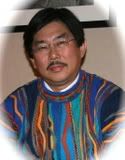 MyHealthMatters a blog on Health and Medical Professional Issues in Malaysia is written by Dr David Quek a cardiologist in private practice from Malaysia. He is currently the President-elect of the Malaysian Medical Association 2008-2009 and most importantly the past-editor-in-chief of the MMA News (Berita MMA) (1996-2007).
 He writes very well, factual and balanced and does not shy away in putting to "paper" his views.
Friday, December 22, 2006
HAZE-OC!
HAZE-OC! - Update October 2006
"There can no great smoke arise, but there must be some fire"
Euphues and his Euphœbus, page 153.
It's that time of the year again, when the politicians, environmentalist, you name it, start screaming at the senseless burning which is creating "haze-oc" (haze havoc) in this region. Different people shouting but same problem!
Since 1997, basically nothing has changed. We can almost say come August-October it is hazy season in this region.
I have been a keen follower of the haze in this region since 1997, see (http://www.vadscorner.com/haze.html) the haze web site. What has happened to the "Regional Haze Action Plan"?* The primary objectives of which were...
to prevent land and forest fires through better management policies and enforcement;
to establish operational mechanisms to monitor land and forest fires; and
to strengthen regional land and forest fire-fighting capability and other mitigating measures.
* The Regional Haze Action Plan was endorsed by the ASEAN Ministerial Meeting on Haze (AMMH) in December 1997.
The ASEAN Agreement on Transboundary Haze Pollution was signed by ASEAN Member Countries on 10 June 2002 in Kuala Lumpur, Malaysia. The Agreement contains provisions on monitoring, assessment and prevention, technical cooperation and scientific research, mechanisms for coordination, lines of communication, and simplified customs and immigration procedures for disaster relief. The Agreement also provides for the establishment of an ASEAN Coordinating Centre for Transboundary Haze Pollution Control. The Agreement entered into force on 25 November 2003. There is no mention whether Indonesia rectified this agreement.
If we cannot tackle the haze problem with our neighbours, I shudder to think of the potentially greater threat we face with a possible outbreak of a deadly avian flu virus from here. A mechanism must be worked out for the greater good of the region.
Tsunami is a natural disaster, but the current haze is a man made disaster. Are we addressing this issue on a cyclical trend? A wake up call only when it gets hazy? Can we sue our neighbour for compensation? They can recover this from the perpetrators of this act. Then probably we will see some results.
One thing I am glad for is the release of the API (Air Pollution Index). I still cannot imagine that we were in denial for so long before that. So credit to the government for maintaining the release of the API!
My last article was just over a year ago, and among my suggestion was the possibility of having the "World Largest Waterbomber" . Maybe we could have a couple in this region to have a quick global/local response action in putting out fires.
Will it work? I don't know but I sure would like to try.
Before I sign off, read an interesting document - "The Impacts of Transboundary Haze Pollution of the 1997/98 Fires Episode on Health". A collaboration between University Putra (UPM) and Global Change Impacts Centre for Southeast Asia (IC-SEA).
Subscribe to:
Posts (Atom)